IRIS V3
IRIS is the on-machine HMI on every bead mill, disperser, mixer, and confectionery system NETZSCH ships globally. V3 was the unified rewrite: one design system, six product lines, in three languages.
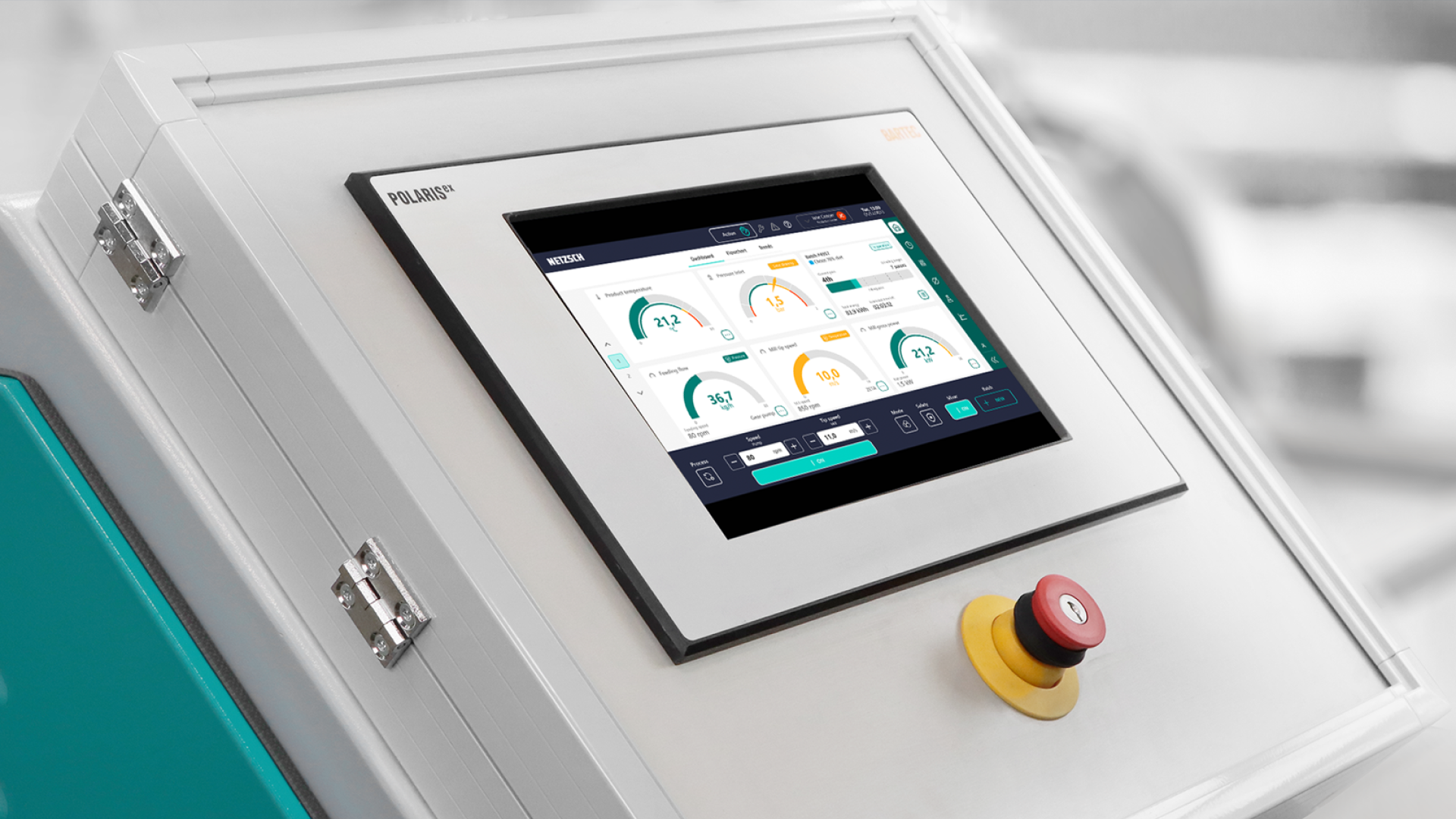
- 6
- Product lines on one DS
- 36
- Countries in the network
- 2023
- Sole designer since
Challenge
Before V3, every NETZSCH machine had its own HMI. An operator who knew InView cold couldn't sit down at a Confectionery panel without retraining. Field service spent half their time fielding questions the UI should have answered.
I came in as the only designer on the platform. The brief was to make six product lines feel like one product without flattening what each machine actually needs, across NETZSCH's network of 36 countries and three languages.
Approach
I started on the floor. Operators wear gloves, lighting shifts through the day, the panel is at chest height with attention split between the screen and a running machine. None of that is on a spec sheet.
Picked InView as the reference and designed it end to end against real users. Then extracted the patterns into the shared system and rolled it out product by product: Confectionery, Epsilon, Mixers, ZetaRS, Inside.
Outcome
Six product lines now ship on the same design language. An operator trained on one machine can sit down at any other and find the dashboard, recipes, alarms, settings in the same place, behaving the same way.
New product onboarding went from months of bespoke design to weeks of configuration. Every new machine NETZSCH G&D ships internationally now lands on this system.
Who I designed for
Four personas, each with a different relationship to the machine.
The operator runs batches under shift pressure, often in Portuguese or German. Most of the screens are tuned for this user: simple controls, low cognitive load, no surprises.
The maintenance technician needs diagnostic depth (error logs, troubleshooting flows, equipment status), and the system surfaces it without forcing it on the operator. The maintenance coordinator sees the longitudinal view across a fleet: history, predictive alerts, planning. The production supervisor reads the machine through outcomes, KPIs and trends rather than real-time state.
Getting all four right without overloading any single screen was the hard part.
Same place, every machine
The biggest decision in V3 was structural, not visual. Every product shares the same module layout: dashboard, alarms, recipes, settings, and maintenance live in the same place on every machine.
Product-exclusive features slot into that layout without breaking it. Bead Filling on InView and Confectionery. Scale Calibration on the dosing-aware products. The Operation Bar on Mixers. The shared structure is a contract; the product specifics live inside the contract, not around it.
That's what makes the cross-product training claim real. The visual language reinforces it (shared buttons, alarm patterns, confirmation flows), but the structural decision carries the weight.
What didn't go well
The 15" to 12.1" adaptation was harder than I expected. Information density that felt right on the widescreen Confectionery panel cramped on the smaller one. Several modules had to be rebuilt from scratch instead of adapted, and that cost more time than the original design did.
Adoption was also a sales job, not a design job. I figured solid components plus clear docs would be enough. They weren't. Patterns that felt too generic on first review got pushed back, and I had to re-pitch them with evidence from the floor: recordings of operators at the panel, lighting tests, glove interactions. Every component earned its place, but earning it was an ongoing conversation, not a one-time approval.
Selected screens
" The work that survives a 12-hour shift in PPE under bad lighting is different from the work that survives a 12-minute design review. Years on this platform taught me the second one is easy and the first one is the actual job. "
DAS Design System
→Built and governed DASDS, the design system for NETZSCH's Digital and Automation Systems. Figma and React/Storybook, used across teams.